Cet article concerne un programme de recherche /This article discusses a research program.
What is robotic mediation? It is the use of a robot as an intermediary between a human being and the world, or between the world and a human being. The human being can be the robot operator or its interlocutor; the world can be immobile or animated, living or object. The robot itself is paradoxical: it is an animated object, simultaneously immobile and mobile, simultaneously inert and active. It stimulates human imagination and engagement through its magical, mystical, and non-judgmental side, particularly if it is humanoid.
There are currently two paradigms used in robotic mediation:
- The robot is programmed to solicit the human subject on specific topics like a human being would do, we talk about a companion robot.
- The human subject uses the robot to act in the world (make it communicate, make it move, etc.), we talk about an extension robot.
The methodologies we design can be a mix between these two paradigms. What matters for us, is that the human subject is always defined as an actor of a situation and the robot is used as a tool to act.
Research program « Robotic Mediations »
The research program “Robotic Mediations” was initiated by Grhapes in 2022. Its objective is to better understand the cognitive, social and emotional mechanisms involved when (inter)acting with the environment through a robot. As part of this program, usage methodologies are designed and tested in society, making it possible to preserve all the complexity of integrating technologies in a natural environment and to support field expertise in the appropriation of equipment and methodologies by educational or therapeutic experts.
A multidisciplinary, collaborative, ecologic and participatory research is conducted, taking into account the opinions, objectives and constraints of the different actors involved: research, associations, foundations, public or private institutions, participants (beneficiaries) and their environment, caregivers and teachers, and companies. All experiments are focused on improving the social, emotional and cognitive skills of participants with special needs. Our specific objective is to use this technology to improve learning and social inclusion of these populations.
The research program is divided into research projects, co-constructed with partners, which allow social robotics experiments to be carried out in a rigorous framework and in an ecological manner, therefore adapted to the constraints of field institutions (educational or medical-social establishments).
The team
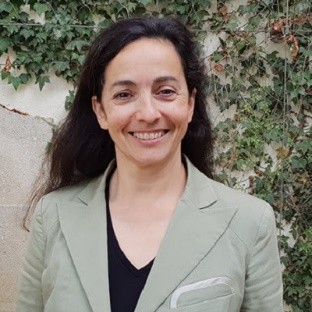
Sophie Sakka (INSEI),Full Professor, Complex Systems

Eric Meyer (INSEI), Associate Professor, Psychology – NDD

Hanna Chainay(Univ Lyon 2), Full Professor, Psychology – Alzheimer
 Margot Dumas, Ph.D. student, CYU - Psychology
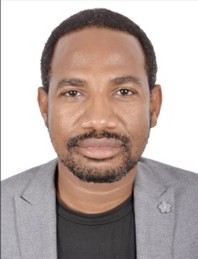 Mouaz Mikail, Ph.D. student, Science of Education
 Quentin Gaie, Ph.D. student, CYU Psychology
Our projects
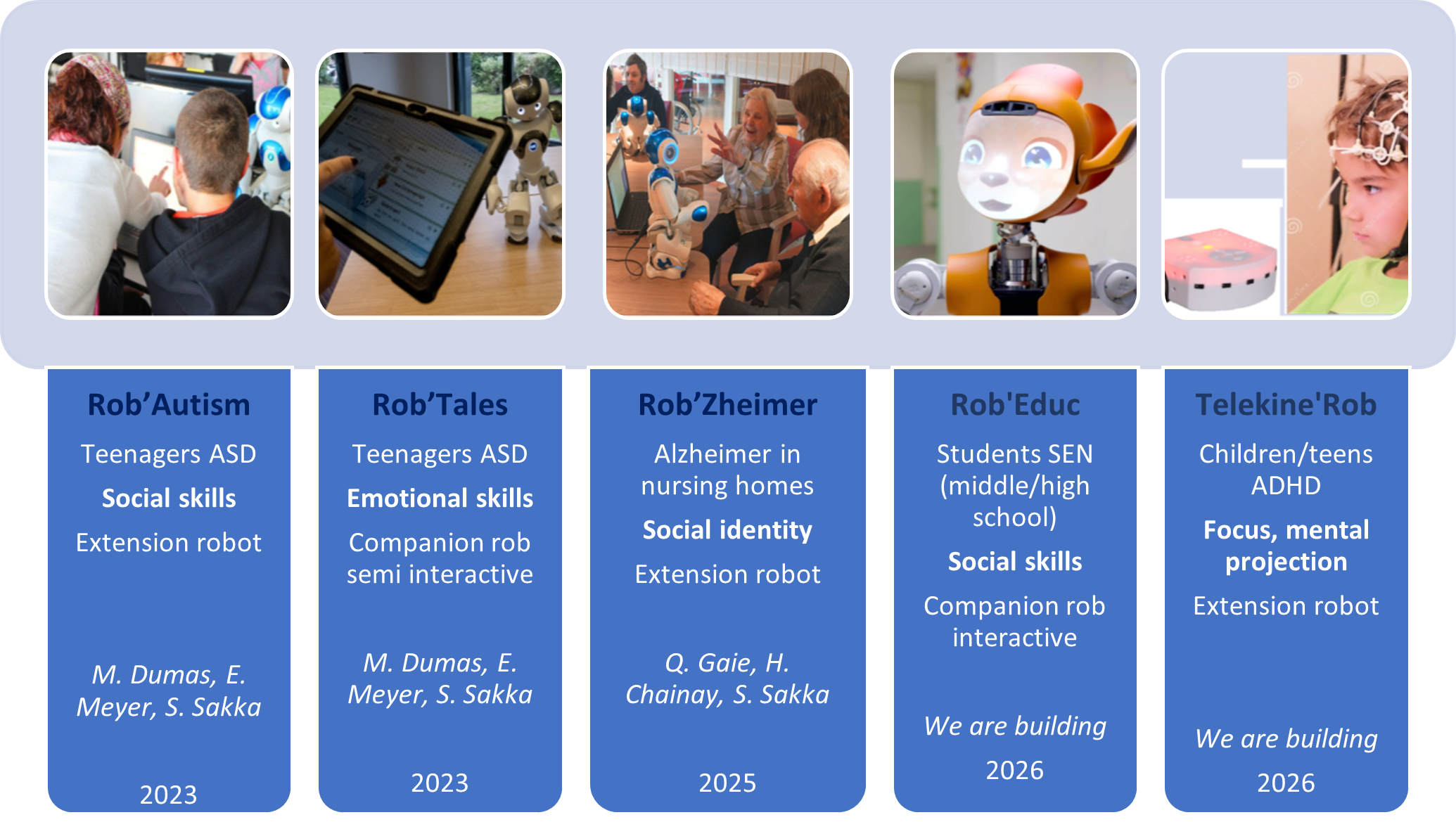
ASD : Autism Spectrum Disorder
ADHD : Attention Deficit Hyperactivity disorder
SEN : Special Educational Needs
Psychological development of individuals
All our projects share a common goal: to support the psychological development of individuals. Rob’Autisme, Rob’Educ, and Rob’Zheimer focus primarily on the development of social skills. Rob’Tales specifically targets the development of emotional competences, such as the recognition and regulation of emotions. Telekine’Rob is designed to foster cognitive skills, particularly attention and executive functions, in order to strengthen self-regulation.
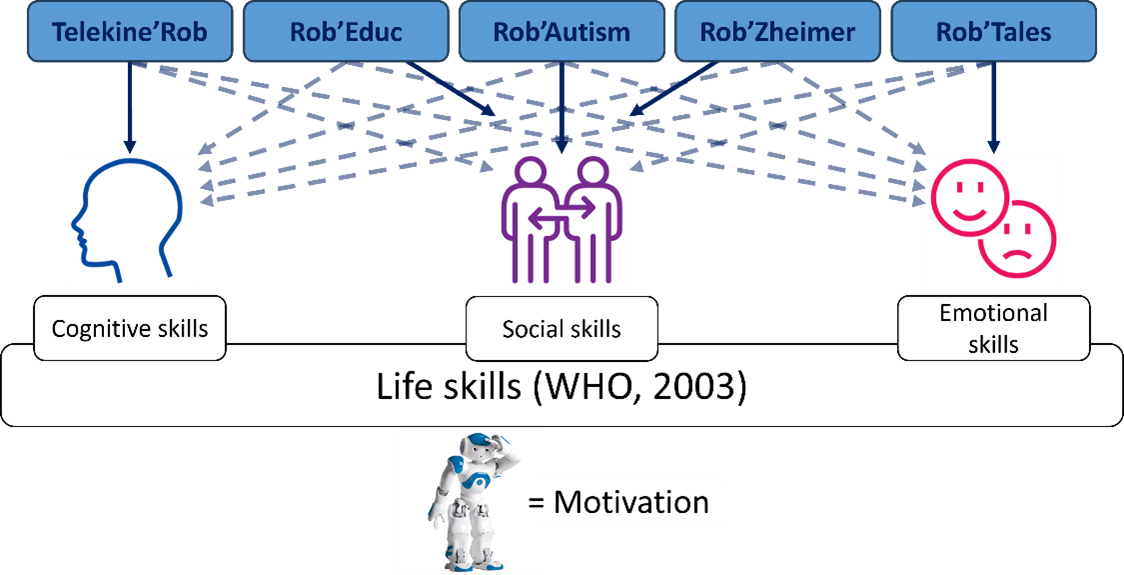
At the same time, each project contributes more broadly to the development of cognitive, social, and emotional skills. These are the core life skills defined by the World Health Organization, which are known to support better health and well-being, improved academic and professional outcomes, and a reduction in risk behaviors.
Using a robot in these interventions helps engage individuals who may be suffering from specific challenges. It brings a motivating and supportive environment, which is particularly valuable for those for whom existing tools are still too limited—even though they represent 5 to 10% of the general population.
Creation of new assessment tools
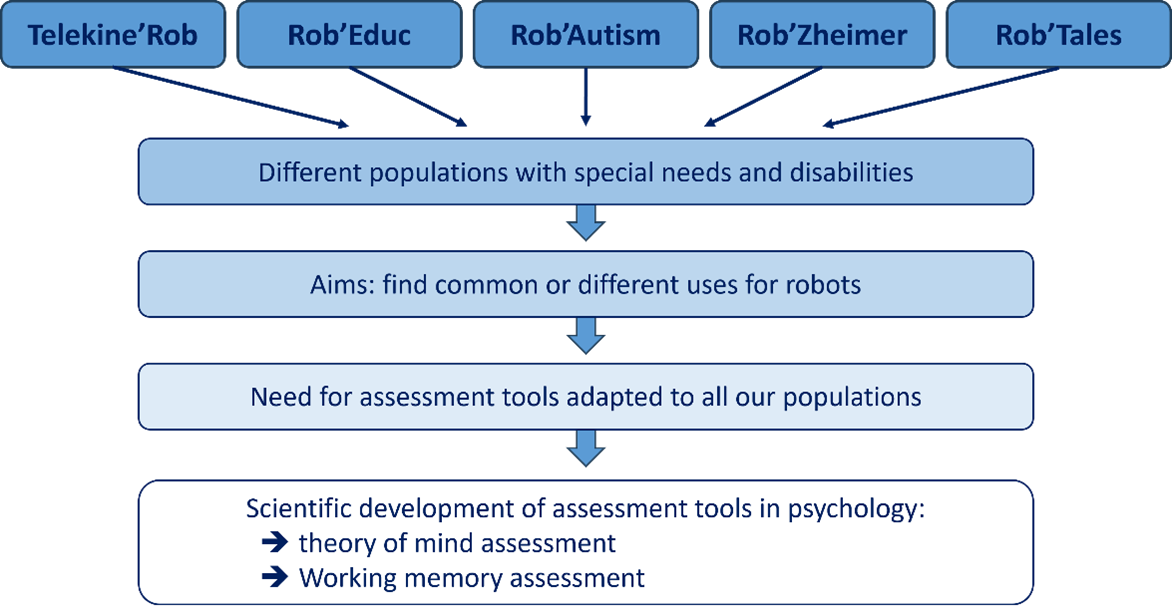
Each project targets different individuals with specific disorders or difficulties. Our goal is to explore as many potential uses of the robot as possible across these diverse populations. Some uses may be shared, while others are more specific to certain groups.
To properly identify and adapt these uses, we need to assess and compare the characteristics of our target populations. Our research on robot-based interventions also leads us to develop new psychological assessment tools, tailored to the needs of these innovative approaches.
Our devices
Robots: NAO, Pepper, Mirokai (2026), Thymio
Devices: motion capture xSens, eye tracker Tobii Pro Fusion
Our collaborators
- Le département des Hauts-de-Seine
- La région Ile-de-France
- ERM Automatismes
- Les Diaconesses de Reuilly
- Campus France
- Les Papillons Blancs de la Colline
- Le Silence Des Justes
- CY Cergy Paris Université
- Université Lumière Lyon 2
- ANRT
- Université Paris 8
- Centrale Nantes
- Institut catholique de Lille
- Université Bourgogne Europe
- Institut Catholique de Paris
This research program is supported by the UNESCO Chair HEN in Disability, Education, Digital (excellence approach) and by the Digital and Vulnerabilities Consortium (ethical approach).